
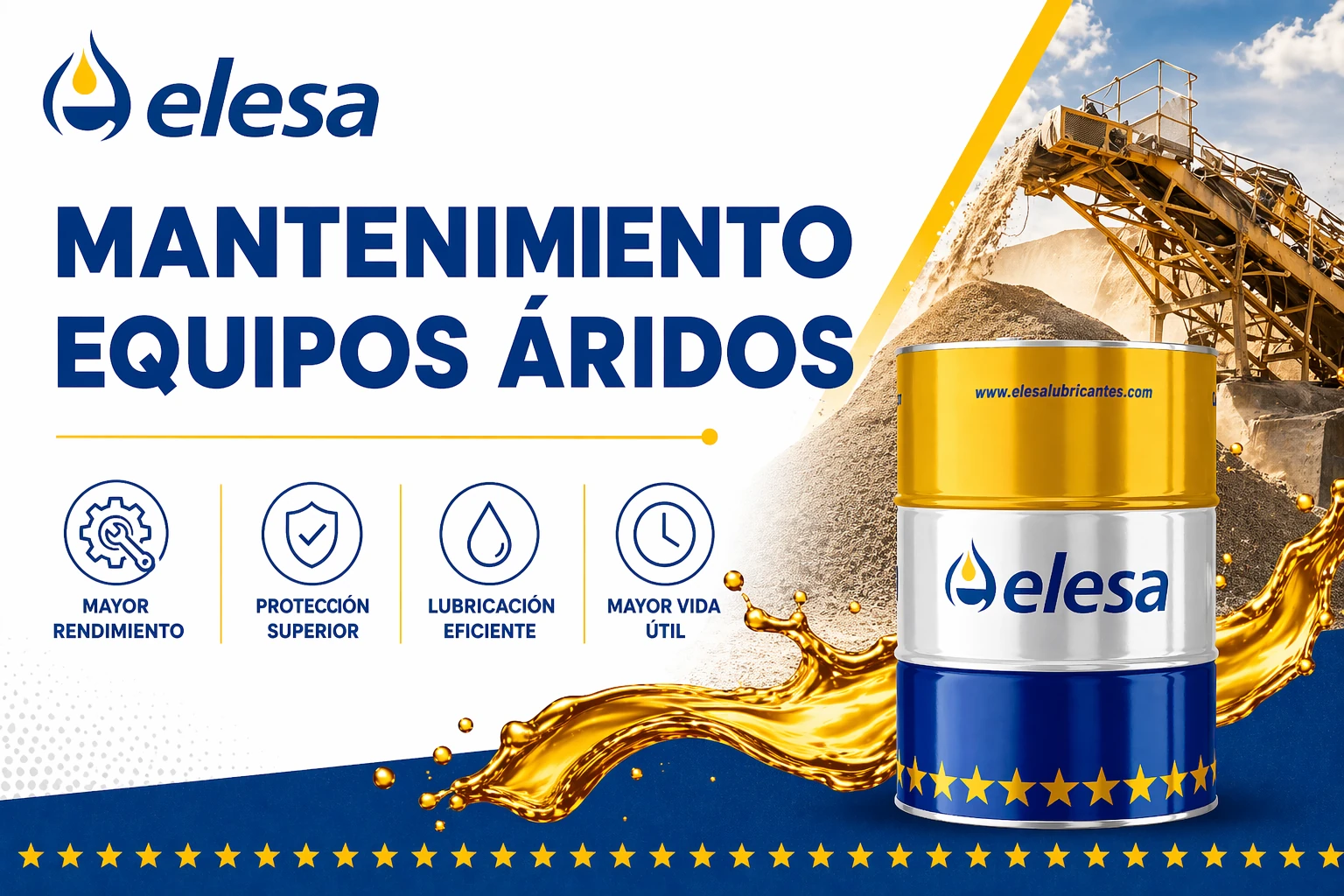
Aggregate equipment maintenance is a critical factor in ensuring operational continuity in crushing, screening and material handling plants. This type of machinery works in extremely demanding conditions, with heavy dust, high loads, constant vibration and exposure to the weather, which accelerates component wear and increases the risk of breakdowns. Implementing a suitable maintenance strategy, together with the use of lubricants specifically designed for this environment, helps to reduce unplanned downtime, improve efficiency and extend equipment service life.
Main equipment in aggregate plants
An aggregate plant involves a range of equipment that requires constant maintenance to keep it running properly. The most common include crushers, mills, vibrating screens, conveyor belts and loading systems, all of which are subjected to very severe operating conditions. This equipment runs continuously and is exposed to abrasive dust, impacts and high loads, making correct lubrication and regular inspection of its components essential to prevent failures and maintain productivity.
Common problems in aggregate equipment
The working environment in this type of facility encourages problems such as premature bearing wear, transmission system failures, dust build-up on critical components and equipment overheating. Particle contamination is one of the main factors affecting lubrication, as it can degrade the lubricant and reduce its effectiveness, leading to increased friction and wear.
Furthermore, high loads and constant vibration can accelerate component deterioration if suitable lubricants are not used and correct maintenance practices are not followed.
The importance of lubrication in aggregate machinery
Lubrication is one of the cornerstones of aggregate equipment maintenance, as it reduces friction, protects against wear and dissipates the heat generated during operation. In this type of application, it is essential to use lubricants with high load resistance, good adhesion and the ability to work in contaminated environments.
Using greases and oils specifically designed for extreme conditions keeps components protected even in the presence of dust, moisture or high temperatures, resulting in greater equipment reliability.
How to optimise aggregate equipment maintenance
Optimising maintenance on this type of machinery requires a structured plan covering regular inspections, lubrication control and equipment condition monitoring. Identifying critical lubrication points, defining appropriate frequencies and using products suited to the operating conditions are key to improving maintenance efficiency.
In addition, staff training and the use of suitable tools reduce errors and ensure that maintenance tasks are carried out correctly, which helps to minimise breakdowns and improve productivity.
Which lubricants to use in aggregate equipment
Lubricants used in aggregate machinery must be formulated to withstand extreme conditions such as high loads, contaminants and high temperatures. High-load greases with EP (extreme pressure) additives are particularly suitable for bearings and components subjected to heavy stresses, while industrial oils must offer thermal stability and resistance to oxidation.
Choosing the right lubricant for each application improves equipment protection, reduces wear and optimises maintenance intervals, resulting in greater operational efficiency.
Improve the profitability of your aggregate plant
Proper maintenance of aggregate equipment not only reduces the risk of breakdowns but also improves the profitability of the operation by optimising machine performance and cutting the costs associated with repairs and production stoppages. Combining a good maintenance plan with lubricants specifically designed for this type of application maximises equipment service life and ensures continuous operation in demanding conditions.
Choosing lubrication solutions tailored to the public works sector is key to ensuring efficiency, reliability and productivity in aggregate plants.