
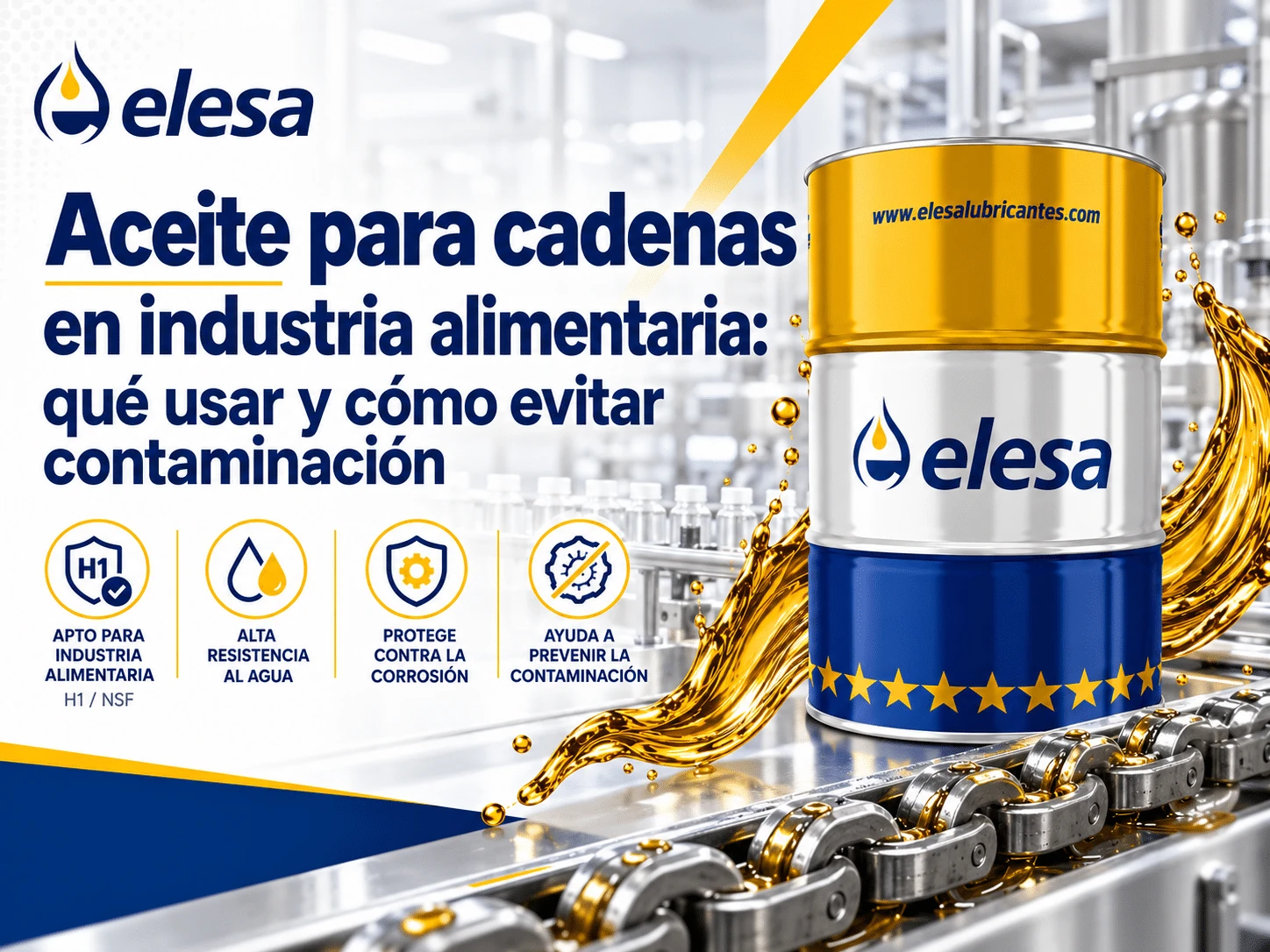
Chain oil in the food industry is key to ensuring that production lines run correctly without compromising the safety of the end product. Chains are found in conveyors, packaging systems and processing equipment, working continuously under demanding conditions such as humidity, frequent cleaning and temperature changes. In this context, using an unsuitable lubricant not only causes wear and mechanical failures but can also create contamination risks, which is why it is essential to use oils specifically formulated and certified for this type of application.
Why oil is critical for chains in the food industry
Industrial chains are subjected to constant friction, loads and, in many cases, aggressive environments where water, detergents and dirt can affect lubricant performance. In the food industry, there is also the risk of incidental food contact, which makes it necessary to use oils that comply with specific standards such as NSF H1.
The right oil reduces friction, prevents link wear and ensures smooth, continuous operation, whereas the wrong lubricant can cause noise, chain elongation and system failures.
Which oil to use for chains in the food industry
The ideal chain oil for this type of environment must be a certified H1 lubricant, formulated for applications where there is a risk of incidental food contact. These oils are designed to penetrate well into the critical points of the chain and to offer high adhesion that prevents them from being removed during operation or cleaning processes.
They must also offer properties such as water resistance, thermal stability and corrosion protection, which allow lubrication to be maintained even under demanding conditions.
Common applications
Food-industry chain oils are mainly used in conveyor lines, packaging systems, processing machinery and auxiliary equipment where chains play a key role in moving products.
In these applications, the lubricant must provide effective protection without compromising process safety, which makes it essential to choose certified products suited to this environment.
Problems caused by using an unsuitable lubricant
Using a non-certified oil on chains in the food industry can have serious consequences, both technical and health-related. From a mechanical point of view, it can cause increased friction, accelerated wear and chain failures, which directly affect production.
However, the greatest risk is possible product contamination, which can lead to recalls, penalties and loss of certifications. That is why it is essential to use approved lubricants for this type of application.
How to optimise chain lubrication in the food industry
To ensure optimal chain operation in the food industry, you need to implement a suitable lubrication plan covering lubricant selection, application frequency and the method used. Applying the oil correctly, making sure it reaches the critical points, is key to maximising its effectiveness.
In addition, using high-quality lubricants reduces consumption, improves system efficiency and extends chain life.
Improve the safety and performance of your lines
Using the right chain oil in the food industry is a key decision to ensure both machinery performance and end-product safety. Choosing certified H1 lubricants reduces risks, improves efficiency and ensures regulatory compliance.
Having specific solutions for this type of application is essential to keep production safe, efficient and in line with industry standards.