
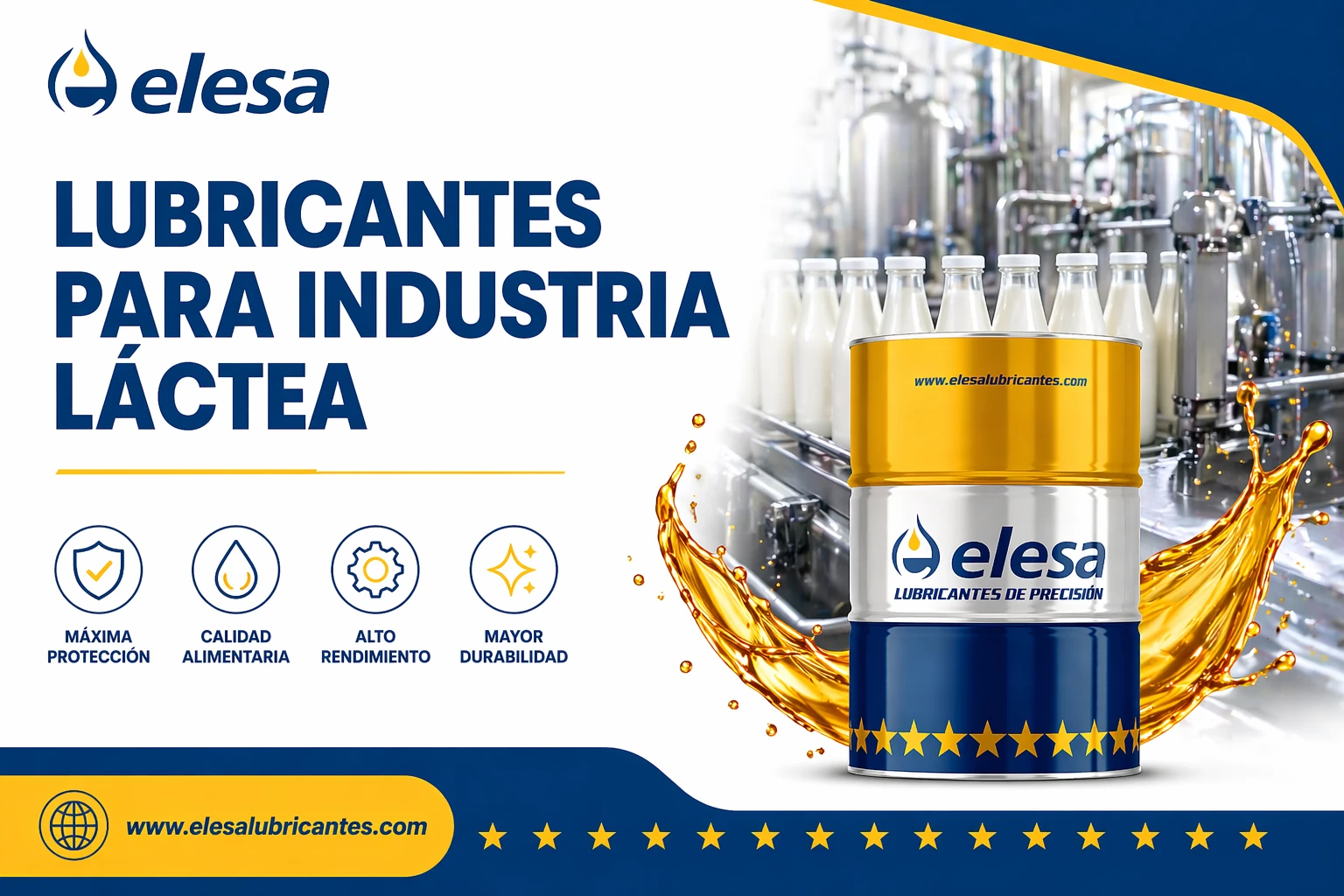
The dairy industry is one of the most demanding environments in terms of hygiene, safety and process control, which makes the choice of lubricant a critical factor in ensuring both the correct operation of machinery and regulatory compliance. On production lines involving processing, packaging, conveying and refrigeration equipment, using unsuitable lubricants can pose a contamination risk, affect the quality of the final product and cause problems in hygiene audits. That is why it is essential to use lubricants specifically formulated for this type of application, capable of delivering high technical performance while meeting food safety standards.
Lubricant requirements in the dairy industry
Lubricants used in the dairy industry must meet strict technical and regulatory requirements, as there is a possibility of incidental contact with food. In this context, it is essential to use NSF H1-certified lubricants, designed specifically for use in food environments. These products are formulated with safe raw materials and comply with the regulations required to minimise any risk of contamination.
Beyond certification, lubricants must offer properties such as resistance to water and cleaning processes, thermal stability to withstand temperature changes and protection against corrosion, as equipment is subjected to frequent washdowns and humid environments.
Lubricant applications in the dairy industry
In a dairy plant, lubricants are used at many points on the machinery, from conveyor systems and chains to bearings, gears and processing equipment. They are also essential in hydraulic systems, compressors and refrigeration equipment, where lubricant performance has a direct impact on system efficiency.
In all these applications, the lubricant must provide effective lubrication without compromising food safety, which calls for careful selection based on the type of equipment and the operating conditions.
Problems caused by using unsuitable lubricants
Using unsuitable lubricants in the dairy industry can have serious consequences, both technically and in terms of hygiene. From a mechanical point of view, it can cause premature wear, equipment failures and reduced operational efficiency. However, the main risk is possible product contamination, which can lead to product recalls, penalties and a loss of consumer trust.
In addition, failure to comply with regulations can affect quality audits and certifications, posing a significant risk to business continuity.
How to choose the right lubricant for the dairy industry
Selecting the right lubricant in this sector means taking into account both operating conditions and regulatory requirements. Factors such as temperature, load, speed and exposure to water or cleaning products need to be assessed.
It is also essential to check that the lubricant holds H1/NSF certification and is formulated to withstand the specific conditions of the dairy environment. Choosing the right product helps to ensure process safety, improve machine efficiency and reduce maintenance costs.
Improve the safety and efficiency of your dairy plant
Using the right lubricants in the dairy industry is not just a technical matter but a strategic necessity to guarantee product quality and regulatory compliance. Opting for certified lubricants adapted to this environment helps to reduce risks, improve equipment reliability and optimise production processes.
Having dedicated solutions for the food industry is key to ensuring efficient, safe operations aligned with industry standards.