
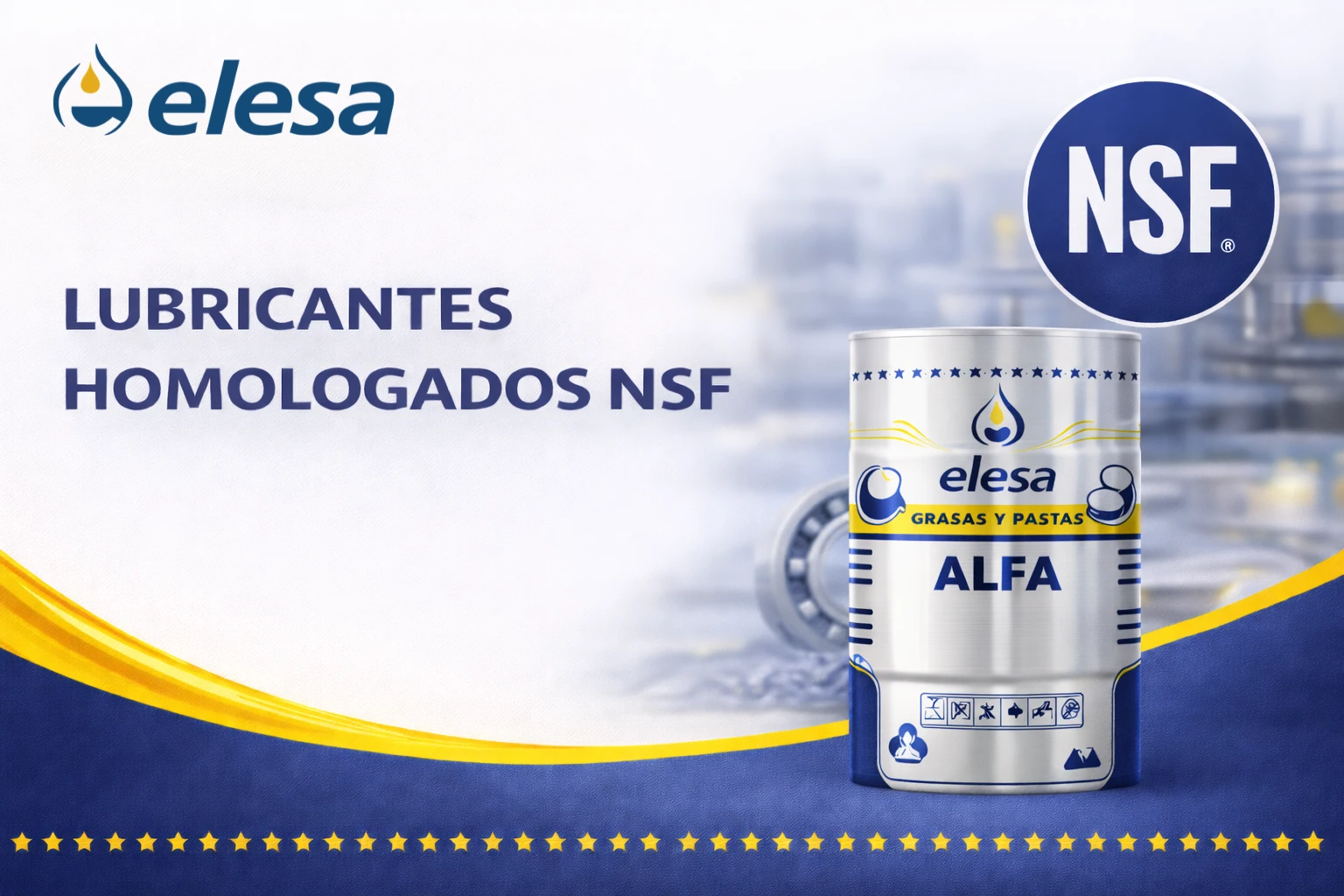
NSF-approved lubricants are those that have been registered by the National Sanitation Foundation (NSF) for use in the food industry under strict safety and quality criteria. In environments where there is a risk of contact with food, such as processing, packaging or handling plants, using this type of lubricant is essential to guarantee the safety of the final product and comply with health regulations. Choosing NSF-certified lubricants not only protects machinery but also prevents contamination risks and problems in quality audits.
What it means for a lubricant to be NSF-approved
When a lubricant is NSF-approved, it means it has been assessed and registered in accordance with the requirements established for use in the food industry. This certification guarantees that the product meets the necessary safety standards for its category, such as H1, H2 or H3, each defined according to the level of food contact permitted.
NSF registration means that the lubricant's formulation has been reviewed and that its components meet the criteria established to minimise risks in the event of incidental contact, giving confidence to both manufacturers and auditors.
Types of NSF lubricants
Within NSF certification there are different categories that determine how the lubricant can be used according to its application. H1 lubricants are the most widely used in the food industry, as they are designed for applications where incidental contact with food may occur.
H2 lubricants, on the other hand, are used in areas where there is no contact with food, while H3 lubricants are intended for specific applications such as release agents or anti-corrosion protectants in direct contact with food. Knowing these categories is key to selecting the right lubricant in each case.
Why it is important to use NSF-approved lubricants
Using NSF-approved lubricants is essential to meet food safety requirements and avoid contamination risks. In sectors such as food, pharmaceuticals or cosmetics, where standards are particularly demanding, using non-certified products can pose a significant risk to the quality of the final product.
NSF lubricants also make it easier to pass audits and quality certifications such as IFS or BRC, as they guarantee that the products used in the process meet the required standards. This not only reduces risks but also improves the company's image with customers and regulatory bodies.
Industrial applications of NSF lubricants
NSF-approved lubricants are used in a wide variety of applications within the food industry, from conveyor systems and bearings to processing and packaging equipment. They are also essential in hydraulic systems, compressors and auxiliary machinery where there is a risk of indirect contact with food.
In all these applications, using certified lubricants ensures effective lubrication without compromising product safety, which is key to maintaining process quality and efficiency.
How to choose an NSF-approved lubricant
Selecting the right lubricant means taking into account both the working conditions and the NSF category required for the application. It is essential to assess factors such as temperature, load, speed and the operating environment, as well as to check that the product holds the corresponding NSF registration.
It is also important to choose lubricants that offer specific properties for the food environment, such as water resistance, anti-corrosion protection and thermal stability, to ensure optimal performance and longer service life.
Ensure safety and regulatory compliance
Using NSF-approved lubricants is a guarantee of safety, quality and regulatory compliance in the food industry. These products not only protect machinery but also ensure that production processes meet the required standards, avoiding risks and improving operational efficiency.
Choosing certified lubricants is a strategic decision that reduces incidents, helps you pass audits successfully and guarantees the safety of the final product in highly demanding environments.