
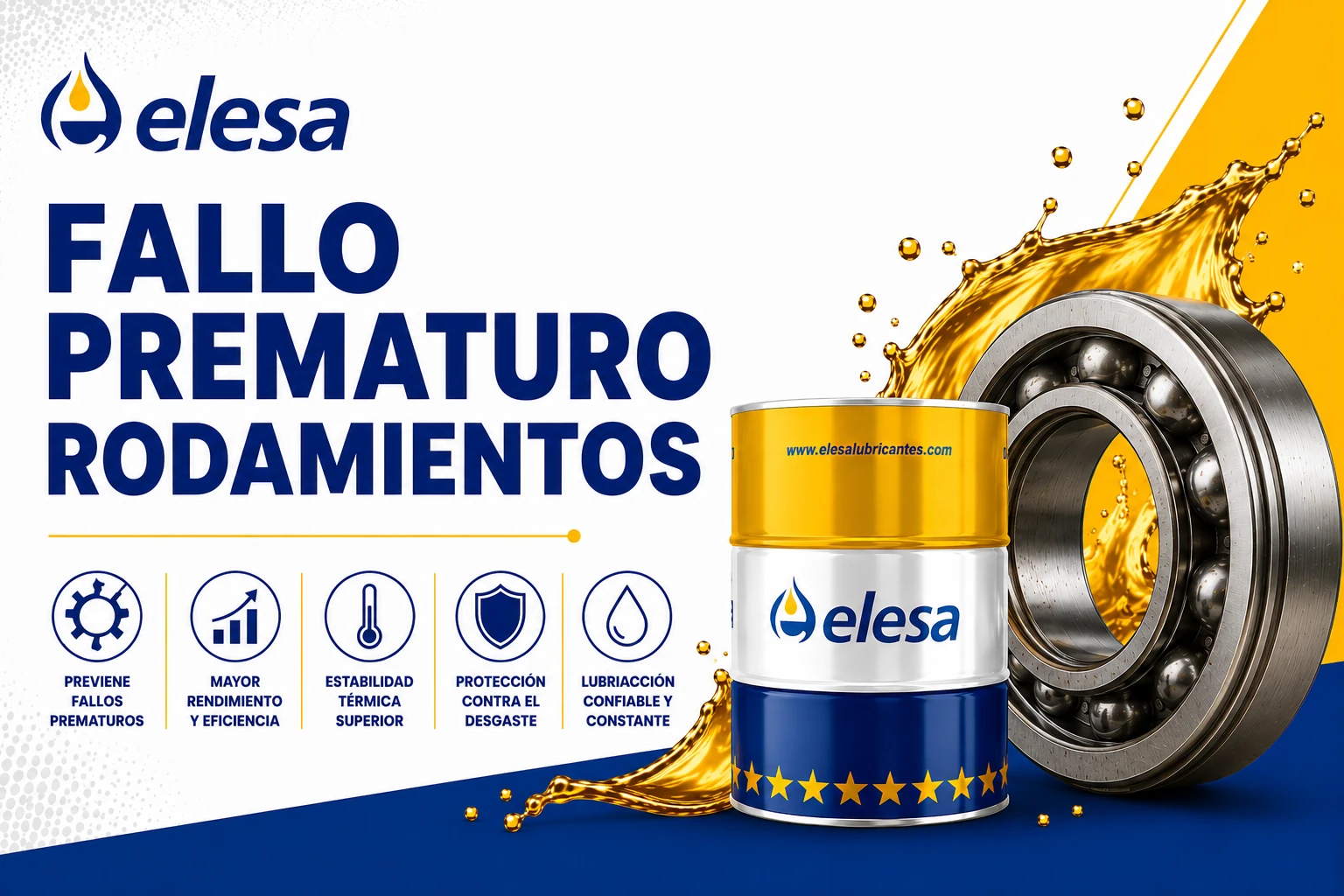
Premature bearing failure is one of the costliest problems in industrial maintenance, as it causes unexpected downtime, shortens the service life of machinery and significantly increases operating costs. Although bearings are designed to withstand demanding conditions, in many cases they fail earlier than expected due to factors related to lubrication, installation or operating conditions. Identifying the causes of premature failure is key to applying effective solutions and improving equipment reliability.
Main causes of premature bearing failure
Premature bearing failure is usually linked to a combination of factors that affect how the bearing operates. One of the most common is incorrect lubrication, whether due to a lack of lubricant, too much lubricant or the use of an unsuitable product, which generates friction and accelerated wear. Contamination by particles, dust or moisture is also frequent, damaging the contact surfaces and shortening the bearing's service life.
In addition, problems such as incorrect installation, misalignment or excessive loads can generate additional stresses that accelerate deterioration. In many cases, these factors are not detected in time, causing failures before the expected service life is reached.
How lubrication affects bearing failure
Lubrication is one of the most decisive factors in a bearing's service life. A suitable lubricant creates a protective film that reduces friction and prevents direct contact between metal surfaces, whereas poor lubrication causes temperature and wear to increase.
Using greases or oils that are not suited to the application can lead to loss of properties, lubricant degradation and system failure. That is why selecting the right lubricant and applying the correct amount is essential to avoid problems.
Effect of contamination on bearings
Contamination is one of the main causes of premature bearing failure, especially in industrial environments where dust, dirt or moisture are present. These particles can penetrate the bearing and damage the raceways and rolling elements.
In addition, the presence of water can affect the lubricant, reducing its protective capacity and promoting corrosion. Keeping the system clean and protected is key to avoiding this type of problem.
Installation and alignment problems
Incorrect bearing installation can generate internal stresses that affect its operation and accelerate wear. Factors such as improper mounting, the use of the wrong tools or poor alignment can cause vibration, higher temperatures and premature failure.
Ensuring correct installation and alignment is essential to guarantee bearing performance and durability.
How to prevent premature bearing failure
Preventing premature bearing failure requires a maintenance strategy that combines correct lubrication, contaminant control and proper installation. Using bearing-specific lubricants, keeping the system clean and carrying out regular inspections makes it possible to detect problems in time and avoid breakdowns.
In addition, implementing a structured lubrication plan helps standardise processes and reduce errors when applying the lubricant, improving system reliability.
Extend the service life of your bearings
Reducing the risk of premature bearing failure is key to improving machinery efficiency and cutting maintenance costs. Combining good practices, suitable lubricants and preventive maintenance extends the service life of components and ensures reliable operation.
Having lubrication solutions tailored to each application is essential to optimise performance in demanding industrial environments.