
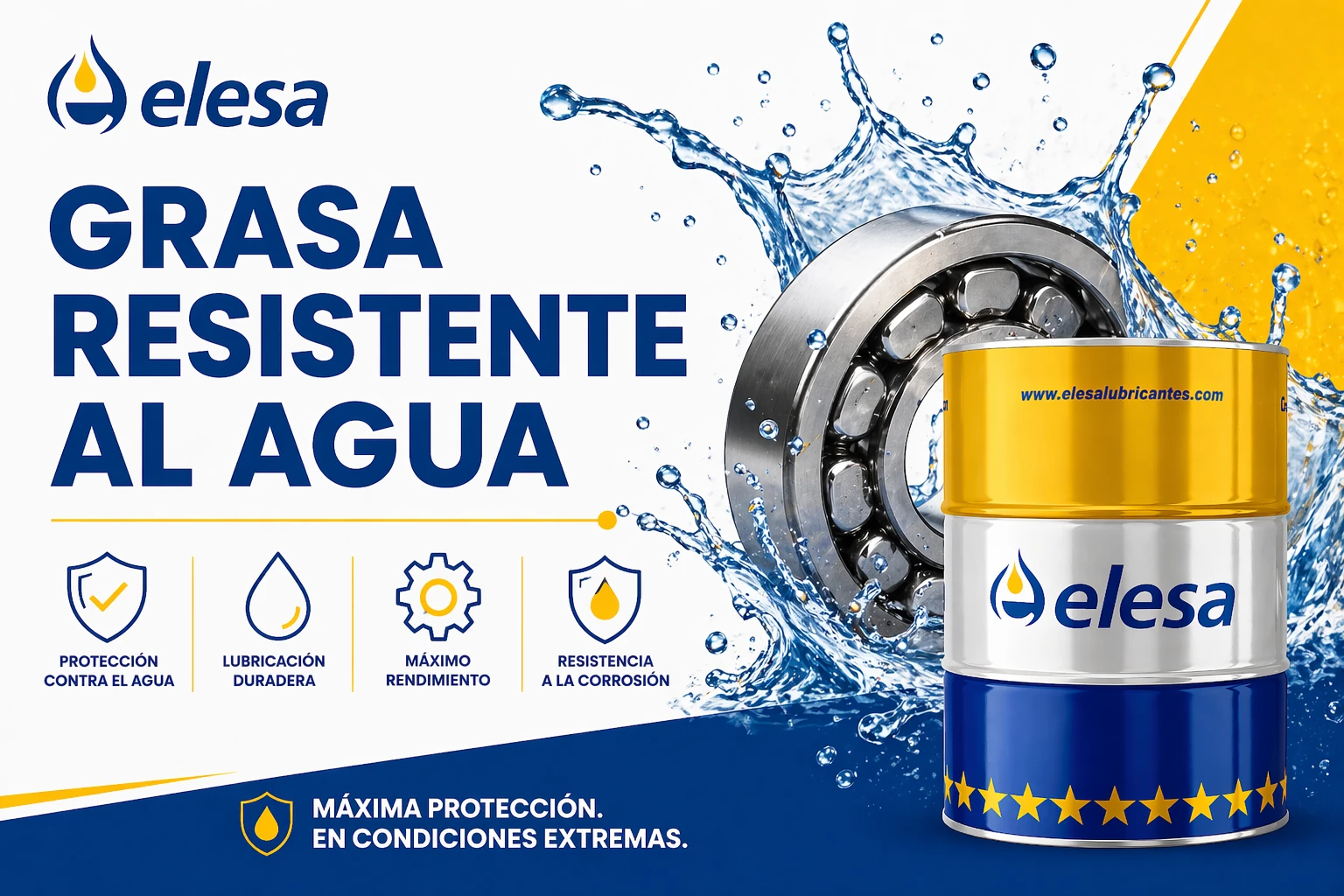
Water-resistant grease is a type of lubricant designed to retain its properties in damp environments exposed to frequent washing or direct contact with water. In industrial applications, where humidity, condensation or even contact with pressurised water are common, using a conventional grease can lead to loss of lubrication, corrosion and premature component failure. That is why choosing a grease with high water resistance is key to protecting bearings, chains and mechanisms subjected to these conditions.
What is water-resistant grease
A water-resistant grease is one formulated to avoid breaking down or being washed out when it comes into contact with water, whether through splashing, immersion or cleaning processes. This type of grease contains specific thickeners and additives that allow it to maintain its adhesion and lubricating capacity even in adverse conditions.
In sectors such as the food, marine and agricultural industries or industrial maintenance, where water is constantly present, these greases are essential to ensure that machinery operates correctly and to avoid problems caused by corrosion or loss of lubrication.
Types of water-resistant grease
There are different types of water-resistant grease, and the choice depends on the application and the operating conditions. Calcium greases are known for their excellent water resistance, although they have limitations at high temperatures, whereas lithium complex greases offer a good balance between water resistance and high-temperature performance.
Calcium sulphonate greases, on the other hand, stand out for their high washout resistance, excellent corrosion protection and high load-carrying capacity, making them one of the best options for demanding applications. There are also synthetic greases formulated for extreme environments, combining water resistance, thermal stability and durability.
How to choose the best water-resistant grease
Choosing the right grease depends on several key factors such as operating temperature, load, equipment speed and the degree of exposure to water. Not all water-resistant greases perform equally well in all conditions, so it is essential to select the right product for each application.
In environments with frequent washdowns or continuous contact with water, it is advisable to choose greases with high adhesion and washout resistance, whereas in applications with heavy loads or high temperatures, priority should be given to thermal stability and the ability to withstand pressure. It is also important to consider the NLGI grade to ensure correct application of the lubricant.
Common applications for this type of grease
Water-resistant greases are used in a wide variety of industrial applications where moisture is a critical factor. They are common in bearings exposed to the outdoors, agricultural machinery, public works equipment, transport systems, the food industry and marine applications.
In these environments, using a suitable grease helps prevent corrosion, reduce wear and ensure continuous lubrication, even in conditions where other lubricants would fail.
Problems caused by using unsuitable grease
Using a grease that is not water-resistant in damp environments can lead to rapid loss of lubricant, leaving components unprotected. This results in increased friction, accelerated wear and a risk of machinery failure.
In addition, the presence of water can cause oxidation of metal components and deterioration of the grease, reducing its effectiveness. These problems not only affect equipment performance but also increase maintenance costs and the risk of unexpected downtime.
Improve your machinery's performance with the right grease
Selecting the right water-resistant grease is key to ensuring equipment reliability in demanding environments. Using lubricants specifically formulated for these conditions extends component service life, reduces maintenance and improves operational efficiency.
Opting for high-quality greases tailored to each application is a strategic decision that has a direct impact on productivity and cost reduction in industrial environments.