
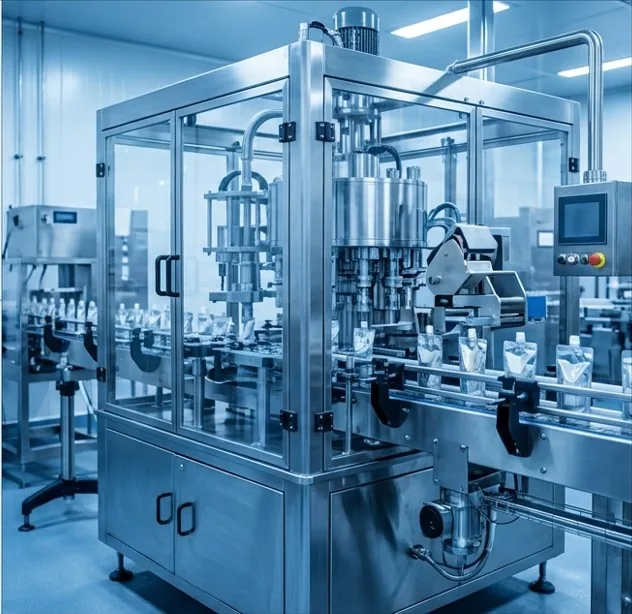
In the food industry, lubrication does not only affect machinery performance. It also has a direct impact on food safety, production line reliability and compliance with hygiene audits.
Plants packaging beverages, juices and liquid food products work with machinery subject to continuous cycles, the presence of water, frequent cleaning and critical points where using the right lubricants is essential.
In this case study, we show how a food packaging plant managed to reduce unplanned stoppages, extend the service life of its components and simplify its maintenance tasks by implementing a lubrication strategy with Elesa Food Grade H1 products.
The customer: a food packaging plant
The customer is a company specialising in the packaging of liquid food products, mainly juices and beverages.
Its plant has automated lines for:
- Filling.
- Labelling.
- Transport.
- Transmission systems.
- Auxiliary equipment subject to frequent cleaning.
This type of facility requires lubrication solutions capable of working with moisture, incidental food contact and strict hygiene requirements.
Initial situation: recurring maintenance problems
Before the intervention, the plant had several problems that are common on food production lines.
The main critical points identified included:
- Unplanned stoppages in conveyor chains and gears.
- Premature wear on filler pistons and bearings.
- Loss or washout of lubricant due to water during cleaning processes.
- Risk of contamination from the use of non-certified lubricants in certain critical areas.
These problems had a direct impact on day-to-day operations:
- Higher maintenance costs.
- Reduced productivity.
- Greater risk in hygiene audits.
- Need for more frequent corrective interventions.
- Higher lubricant consumption due to poorly optimised application.
Project objective
The aim was to implement a safer, more efficient lubrication solution tailored to the plant's actual operating conditions.
The intervention focused on four priorities:
- Reduce unplanned mechanical stoppages.
- Extend the service life of critical components.
- Replace conventional lubricants with H1-certified products.
- Simplify maintenance with a more streamlined product range.
Solution applied: Elesa Food Grade H1 lubricants
To solve the problems identified, a lubrication strategy was implemented based on Elesa Food Grade H1 products, selected according to the type of application, the lubrication point and the operating conditions.
Products used
| Product | Main application | Function in the plant |
|---|---|---|
| elesa® ACEITE FLUID H1 46 | Filler pistons | Fluid lubrication for filling equipment |
| elesa® GRASA CAPLEX H1 TF | Pistons, reducers and machinery exposed to water | Protection in areas exposed to moisture and washing |
| elesa® GRASA VITA H1 | General lubrication | Unified maintenance tasks |
| elesa® GRASA NT H1 CHAIN | Drive and conveyor chains | Lubrication of moving chains |
| elesa® CLEAN H1 | Cleaning of equipment and surfaces | Cleaning compatible with food environments |
Product selection was based on the plant's actual needs and the technical recommendations applicable to each critical point.
Implementation process
The implementation was not simply a matter of replacing products. It was carried out as a technical project to improve maintenance.
The process included:
1. Initial audit of lubrication points
The plant's main lubrication points were reviewed to identify:
- Component type.
- Greasing frequency.
- Operating conditions.
- Presence of water or moisture.
- Risk of incidental contact with food product.
- Lubricants used up to that point.
2. Gradual replacement of conventional lubricants
Once the critical points had been identified, conventional lubricants were gradually replaced with products from the H1 range, suitable for food industry environments.
3. Product consolidation
One of the objectives was to reduce maintenance complexity. To do this, the number of products used was rationalised, avoiding duplication and making the technical team's work easier.
4. Maintenance staff training
Technical staff received training on:
- Applications of each product.
- Lubrication frequencies.
- Good application practices.
- Correct use of H1 lubricants in critical areas.
- Cleaning and preventive maintenance.
Results after 6 months
After six months of implementation, the plant achieved significant improvements at both technical and operational level.
| Indicator | Result achieved |
|---|---|
| Stoppages due to mechanical failures | -35% |
| Service life of lubricated components | +25% |
| Issues in hygiene audits | 0 incidents |
| Lubricant consumption | -20% |
| Equipment cleaning | Less residue build-up |
These results show how the right lubrication strategy can have a direct impact on productivity, safety and maintenance costs.
Key benefits for the food plant
Introducing Elesa Food Grade H1 lubricants delivered benefits across different areas of the operation.
Greater food safety
Using H1 lubricants helped reduce risks in areas where incidental contact with food product could occur.
Fewer unplanned stoppages
Better lubrication of chains, gears, pistons and reducers cut down on mechanical incidents.
Longer component life
Components exposed to friction and moisture operated with more suitable protection, which extended their service life.
Lower operating costs
Fewer breakdowns, lower lubricant consumption and fewer corrective interventions helped optimise the total cost of maintenance.
Simpler maintenance
Consolidating products made internal management easier for the technical team and reduced the complexity of the lubricant store.
Implementing a lubrication strategy specific to the food industry transformed a situation marked by recurring failures, high lubricant consumption and audit risks into a safer, more efficient and more profitable operation.
This case shows that choosing the right lubricant is not just a technical matter. In sectors such as food, it is also a key decision for improving productivity, protecting machinery and strengthening food safety.
At Elesa Lubricantes, we develop solutions to help food companies optimise their maintenance processes with products adapted to their actual operating conditions.
Do you need to improve lubrication in your food plant?
At Elesa Lubricantes, we can help you select the most suitable product for your filling, conveying, labelling, cleaning or general maintenance lines.
Contact our technical team and we'll help you optimise your lubrication plan.